

How to Choose a Dental Implant Course in Egypt: 10 Questions to Ask
ConfiDental Education Center
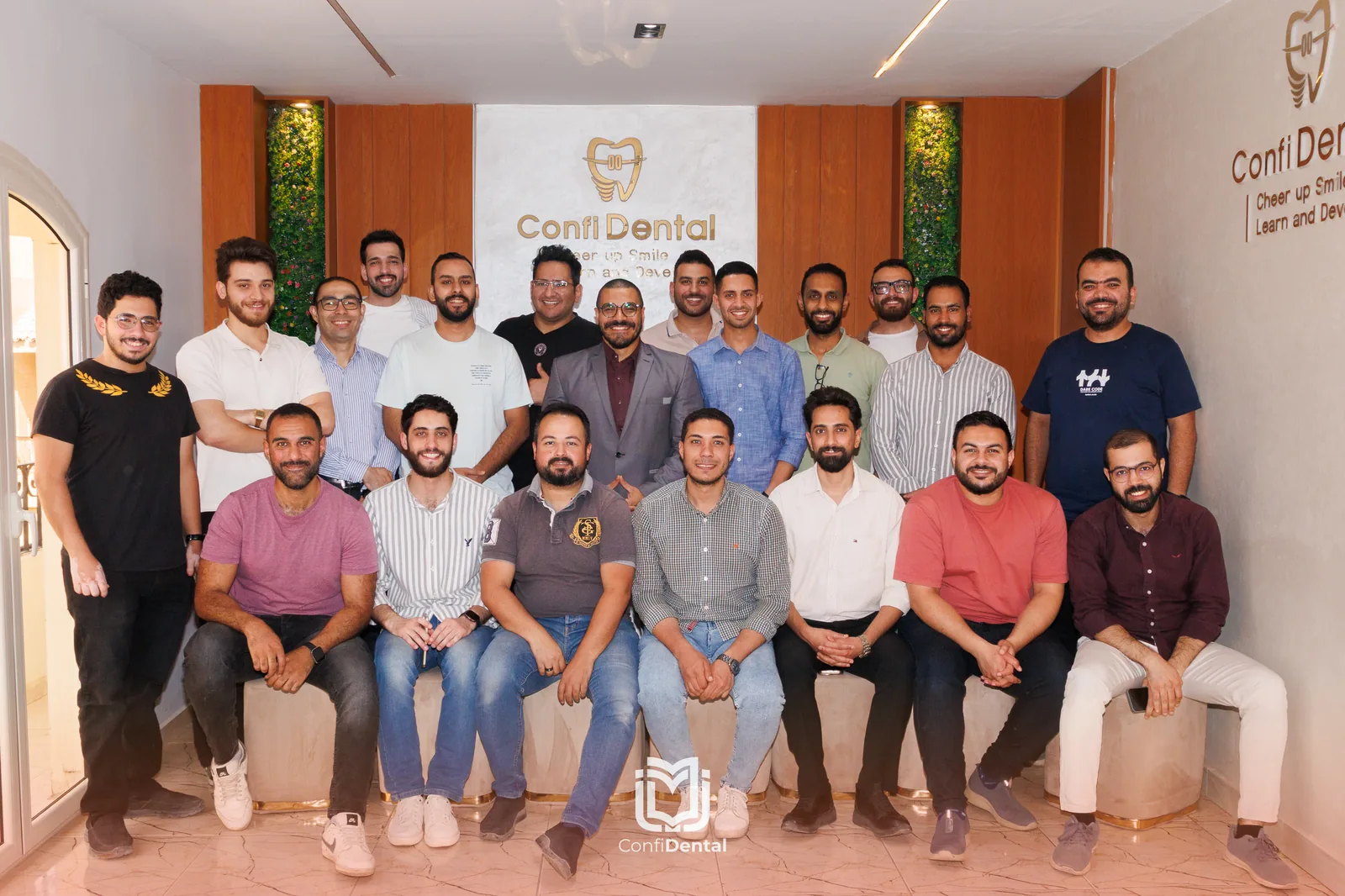
Programme team
There is no shortage of implant courses in Egypt. There is a shortage of ways to tell them apart before you have paid.
Most course marketing says the same things: hands-on, international faculty, certificate awarded. This is a set of questions that actually separate one programme from another — worth asking any provider, including us.
1. How many hours are you actually holding an instrument?
This is the question that matters most and the one least often answered directly.
"Hands-on" is used to describe everything from a full day at your own station to watching a demonstration from the third row. Ask for the split between lecture hours and bench hours, and ask what "hands-on" means specifically — your own model, your own handpiece, your own station, or a shared one.
Ask how many hours you spend holding an instrument. If the answer is vague, that is the answer.
2. How many people per instructor?
Group size determines whether anyone corrects your technique. In a group of forty, an instructor cannot review each participant's preparation. In a group of eight, they can.
Ask for the participant-to-instructor ratio during workshops specifically, not for the total cohort size. Those are different numbers and providers sometimes quote whichever is more flattering.
3. Do the instructors still treat patients?
There is a real difference between someone who teaches implantology and someone who places implants every week and also teaches.
Practising clinicians bring current problems: the component that is hard to source, the complication they managed last month, the technique they abandoned. Ask what the faculty do when they are not teaching.
4. Does the syllabus cover prosthetics properly?
This is the single biggest differentiator between implant courses, and the easiest to check.
Many surgical-focused courses will teach you to place an implant and leave the restoration as a footnote. But once the implant has integrated, everything determining whether the patient is happy in five years is prosthetic — emergence profile, occlusion, retrievability, material choice.
Look for these in the syllabus
- Loading protocols and prosthetic considerations
- 3D prosthetic implant positioning
- Impression techniques and verification jigs
- Abutment solutions and materials
- Screw-retained versus cement-retained restorations
- Implant protected occlusion
If a course covers surgery in depth and prosthetics in a single afternoon, you will finish it able to place an implant and unable to finish the case.
5. Is there radiology and planning before the surgery?
A programme that starts with drilling is teaching you a manual skill without the decision-making that surrounds it.
CBCT interpretation, planning software and prosthetically driven planning should come before surgical content, because implant position is a prosthetic decision executed surgically. If planning appears late in the syllabus or not at all, ask why.
6. What does "clinical cases" actually mean?
Courses advertise live cases in ways that range from "you will place implants on supervised patients" to "you will watch someone else place implants".
Ask directly: will I place, will I assist, or will I observe? How many? What happens if patient availability falls short? Those answers vary enormously between providers advertising the same phrase.
7. Where does it run, and can you actually attend?
A programme in Cairo is not much use if you practise in Asyut and cannot close your clinic for ten consecutive days.
Ask whether the programme runs in modules or consecutively, whether it rotates between cities, and whether you can take a module at a different branch if you miss one. For most working dentists this is the practical difference between finishing a programme and abandoning it halfway.
8. What is the certificate actually worth?
Certificates vary from a genuine accredited record of CPD hours to a printed attendance slip.
Ask which body accredits the programme, how many CPD hours it carries, and whether the certificate can be independently verified. Ask this before you pay, and be a little wary of providers who answer it vaguely.
9. What happens after the course ends?
The first case you do alone is the one where you need support most, and it happens after the course has finished.
Ask whether there is an alumni group, whether instructors answer case questions afterwards, and whether you can return to observe. The answer tells you whether the provider sees you as a student or a transaction.
10. Can you talk to someone who finished it?
Testimonials on a website are curated by definition. Ask to speak to a recent graduate, or find one yourself.
A provider confident in their programme will make that introduction without hesitating.
A note on price
Price is the easiest thing to compare and the least useful. A cheaper course that leaves you unable to restore a case has cost you more than an expensive one that did not.
Compare on bench hours, group size, prosthetic coverage and post-course support. Then look at price.
How we answer these
For transparency, our own programme: the Clinical Implant Program runs ten teaching days with six hands-on workshops and up to ten clinical cases, taught by five practising specialists, covering radiology and planning, surgery, prosthetics and perio concepts. It runs across Cairo, Alexandria, Damietta, Ismailia and Asyut, in modules rather than consecutive days.
You can read the full syllabus before speaking to anyone, and book a consultation call to ask the rest of these questions directly.